Wednesday, March 28, 2007

RIFF & microGROOVES 4


LET ME BE YOUR FROG
AXL´s COUNTRY MERRY-GO-ROUND
TRAFFIC JAM
PICKNICK BOOGIE SITUATION
BORIS BAY´s DIARY
(click on picture for larger)

New blog mostly dedicated to folkmelodies from many countries, actually the Globe, and, maybe.... your own backyard (Watchout!)

The new blog is called....Doctor TABOOLA
http://drtaboola.blogspot.com
You find all the "related"blogs easily by clicking "view my profile".

Thursday, March 22, 2007

Young Players 3


Old Gibson guitar still in use. Johan Skoglund in Hyltebruk practise on his fathers old guitar, in the 1960ties used on stage in popmusic performances.

Wednesday, March 21, 2007

RIFF & microGROOVES 3


CUBA CUBE
TROLLZ
LONG SHIP, SHORT TRIP
NEW YORK FLADDERMAUSE
(click on picture for larger)


Sunday, March 11, 2007

RIFF&MICROGROOVES 2


POCKET PARKER
FUNKY BUT
BINGO ROYALLE
SANTANA´s DAYMARE
DISTURBING NEIGHBOUR
AQUA MAN

One, in hands,... is better than ten in the woods.

For those who don´t figure out how it works;
As in the other examples shown in this blog lately, sketches are meant for playing exercise in group (2-3, foremost electric guitars, including bass+drums) Chord symbol(s) are here missing, but in most cases it´s simple,... one?two? More? Which? That´s your task, to figure out in what key you are playing.
"The Groove" appears normally when all pieces (in a piece of music...) are put together, in a c t i o n, and all species in the group feel comfort in playing, as eating bananas together. ( I didn´t mean that. I´m sorry. Like fruit myself) General introductional role taking the bassline:
follow the lowest note in complicated riffs OR "simplifye" it taking immediate contact with the actual chord(s), OR do you own suitable bassline taking idea from both outlines.
Taking the soloimprovisation: In examples here so far, the bluesscale have a central role in casting. As you know..., you must analyze the possibilities using any scale.

RIFF&MICROGROOVES 1


BIG TOMBOLA
WHY NUT?
BAGPACKER´s CHECKUP
TRAIN TO RAENNESLOVE
WALKING WITH OSKAR
(click on picture for larger) = If YouPrint from this...,, you normally get King-Size. so, if you still want them, download for later study, otherwise, take a Bic-Ball Point pen.......

Saturday, March 10, 2007

Here we go again


DUCKHOUSE ("full score")
...2-3 electric guitars, including bass (+drums). The second part (B) is the best part for soloimprovisation and find the suitable bluesscale in the right key , and let it dazzle from your thundering guitar

Basically the "chord"changes in the B- section are from "What Shall We Do With The Drunken Sailor"...OOOPS! Now you got one of my secrets!

Monday, March 05, 2007

Young Players 2


...Lazy Sods
Drummer (female) is missing on these early pictures
(meet them every week, in the town of Laholm)

Sunday, March 04, 2007

Adventures


Inspired by the metal or punk styles; Adventures of the Spider Woman 2...., I usually today use ball-point pen of cheap quality. Yes, I know, there are computer programmes. This piece is meant for two-three electric guitars, including bass (+ drums)Secrets of improvisation are not mentioned on the paper. If you are Profezzor of Ordentlicher Punk, do the CLICK on the picture and you got the Close-Up.

Saturday, March 03, 2007

YOUNG PLAYERS 1


To begin with; myself, lucky owner of my first electric. This is so far ago you need a time-machine, like in the H.G. Wells story. For example, I tried to play pieces like Geronimo or Apache (by the Shadows). The "original" Guitar Boogie (by Arthur Smith) was something, ...in the nearby horizon. It was one of my favourite records in even earlier (78rpm) days.

WARNING: Not recomendable sitting position, it´s better to hold girls like that.

Monday, January 22, 2007

Monday, January 08, 2007

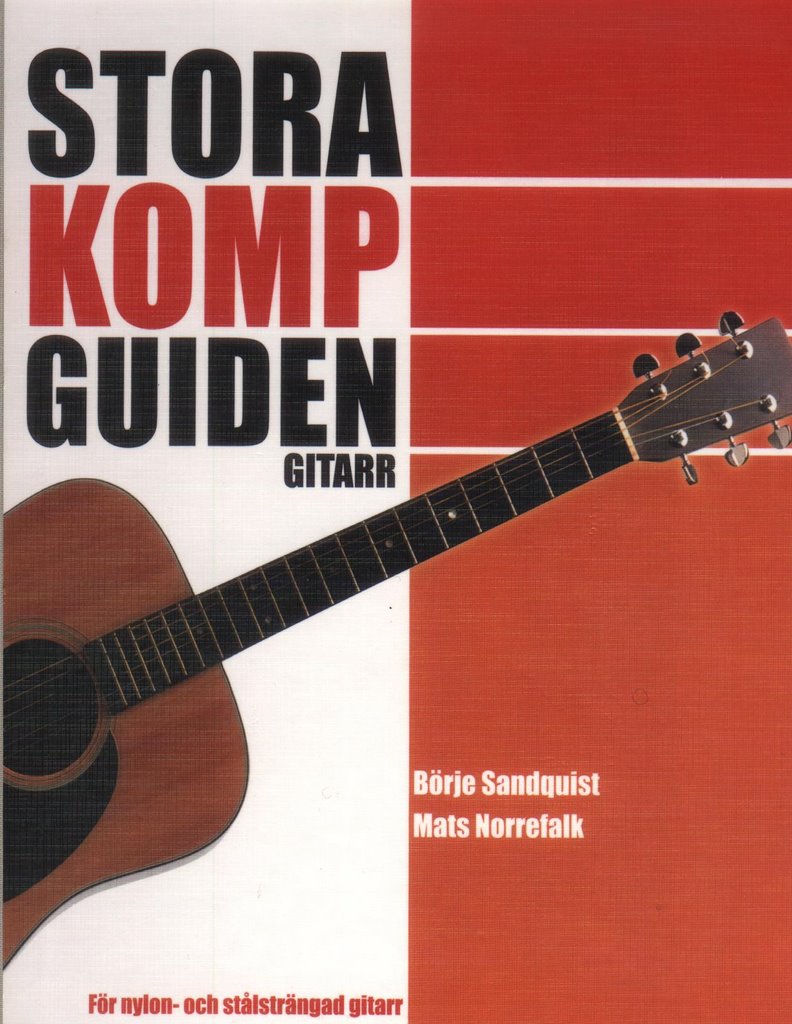
TREVLIG BOK


STORA KOMPGUIDEN av Börje Sandquist/Mats Norrefalk
Copyright 2004 Notfabriken Publishing AB För nylon- och stålsträngad gitarr

Under en rutinexpedition på biblioteket råkade jag se den första gången, lade med detsamma märke till "att det här var något", men hade inte då tid att engagera mig mera, tänkte "att den här måste jag låna senare. Vid flera nya besök var den alltid utlånad, tills en dag...., då jag kunde ta hem den för att kolla i den.
Skall vi kalla den halvklassisk? Varför traggla med 1800-tals etyder (ofta arpeggion, utvalda basar eller "lyfta" ackord) när man kan spela/öva välgjorda komp till modernare låtar? Dessutom med tabulatur för den mindre vane notläsaren.
En bok mycket för den som har kompat akustiskt tidigare, har någon överblick av repertoar ur svensk synvinkel. Men det omfattande urvalet av låtar är också i hög grad internationellt, modernt. Väldigt "rutinerad" måste man inte vara för att tillgodogöra sig bokens innehåll, men kanske ha en del erfarenhet för att särskilt uppskatta dess innehåll. Med lite hjälp och handledning finns här mycket att hämta.
Sammanfattningarna av t ex "Bossa"rytmer eller Fingerpicking är kortfattat utmärkta, de bästa jag sett i svenska böcker.
Det är hur viktigt som helst att ta in rytmik ( betoningar, accenter) i kompundervisningen. Olika anslagstekniker (för det första; fingrar eller plektrum?) har sin givna plats bland gitarrister.

I engelskspråkig notlitteratur (främst inom populär musik/jazz) har man säkert använt begreppet "RHYTHM GUITAR", sedan 1930-talet. I Sverige har "Rytmgitarr" aldrig etablerat sig som ett särskilt begrepp. Alla spelar (-de) gitarr; möjligen Spansk Gitarr eller så det nya med El-gitarr. Visst har man använt begreppet att man KOMPAR, istället för det äldre; ackompanjera. Men det har inte haft någon riktigt vetenskaplig status, inte jämförbart med att spela "solo". I praktiken kryllar världen av kompgitarrister, i alla musikaliska sammanhang. T ex rockmusik.

Mycket av notutgivningen kring populärmusiken har förr varit ganska pianoorienterad. Ett exempel jag brukar dra fram är att när gruppen the Beatles var nya och som hetast (1960talet), gavs det ut 50 av deras låtar i en bok (engelsk utg.), sedan en till med ytterligare 50 av deras välkända alster. Dessa två böcker var länge mycket vanliga, förmodligen i hela Europa. Alla låtar var i pianoarrangemang, i många fall i b-tonarter, i de flesta fall inte i originaltonarterna. Böckerna såg fina och auktoritära ut, med lite idolbilder. Det förväntades naturligtvis att ungdomar skulle skaffa sig dessa. En fråga var för mig i många år, när jag kom på den, varför gavs inte låtarna ut i första hand i originaltonarterna? The Beatles var ett typiskt gitarrband, stilbildande för så många.
Först långt senare har det rättats till, man går till och med längre, numera i den digitala tab-utgivningens tidsålder, kan man (nästan) läsa om vilket plektrumtjocklek som användes vid tillslaget av några toner, i just den låten, vid just det tillfället, den dagen.... hur stod solen på himlen, vad hade man ätit till frukost, ja, möjligheterna till musikvetenskaplig utveckling och analys är många. Så långt med historiebeskrivingen går inte Sandquist/Norrefalk inom dessa pärmar, säkerligen handlar det lite om platsbrist. Mycket historia finns idag dessutom på Internet.
Det enda jag spontant något saknar, är i denna visserligen KOMPGUIDE, är att melodierna (upp en oktav i många fall) kunde funnits med tab.... Kanske i slutet av boken, i mindre format. Jag är den förste att försvara kompets betydelse i alla musikaliska sammanhang, men det verkar finnas en relativt stor efterfrågan av melodispel i högre lägen. Då och då, helt plötsligt..., ofta på låtar som man inte trodde..., själv har jag under stress fått skriva meloditab på t ex Kung av Sand och Proud Mary, av spelsugna som bara kräver att jag skall hinna kunna, absolut med detsamma, genast, annars blir det bakläxa.
Något som elgitarrkulturen fört med sig med tiden. Men det kan också vara musikaliskt attraktivt på akustiskt, naturligtvis, varför harva melodier i "sångbokslägen" i all evighet.
Så, kanske något för STORA KOMPGUIDEN 2...,
"för dig som även tycker det är roligt att spela melodier".

Sunday, December 24, 2006

Monday, November 20, 2006

A few weeks back

On the operation table lately, because of my patients..., excuse me, I mean pupils (but I prefer to call them sharetakers)

”Malaguena”
Molly Malone (Irish)
Silent Night
Heart of Gold (N Young)
Leavin on a jetplane (J Denver)
Riders in the sky special
Going to Chicago (Rushing,Basie)
Over the Rainbow (Arlen?)
House of the rising sun
When Johnny Comes Marching home
Bad Moon Rising
Ge en Sol (Gärdestad)
Scarborough fair
Story of the lonely Guy – Stay together for the kids (Blink182)
Only women bleed (Alice Cooper)
Lordipiece, unknown title
This modern love (Bloc Party)
Blue Unit (P Hovensjö)
Ylle, Kaviar (Mora Träsk)
Does your mother know (Abba)
Lazy River (Carmichael?)
Balladen om Fredrik Åkare och den söta Cecilia Lind(Wreeswijk)
Hold on Little Girl (Mr Big)
Bridge over troubled water (P Simon)
Movie Star (Harpo)

plus, as usual, a number of riffs, scale/fingerings and rythmics

Coming up in the next weeks; Takida, Green Day, Christmas-routines (again)...., and everything else that inspiration gives.

Monday, October 09, 2006

Normal Activity...


My mind is always occupied by guitar players...., during one normal week this autumn I meet for example; Robin, Johan S, Daniel, Rickard, Sarah, Tom, Filip, Sebastian, Alex, Tina N, Tellus, Wilfredo, Adam, Olof, Patrik, Diana, Key, Tina P, Susanne, Marie, Alicia, Felix, Isac, Moa, Johan, Kristina, MarieLouise, Anna, Eva, Jenny, Molly, Pontus, Alexander, Jonas, Klara, Johan N, Michaella, Jakob, Jimmy, Johan Å, Andreas, Hanna, Mikael N.
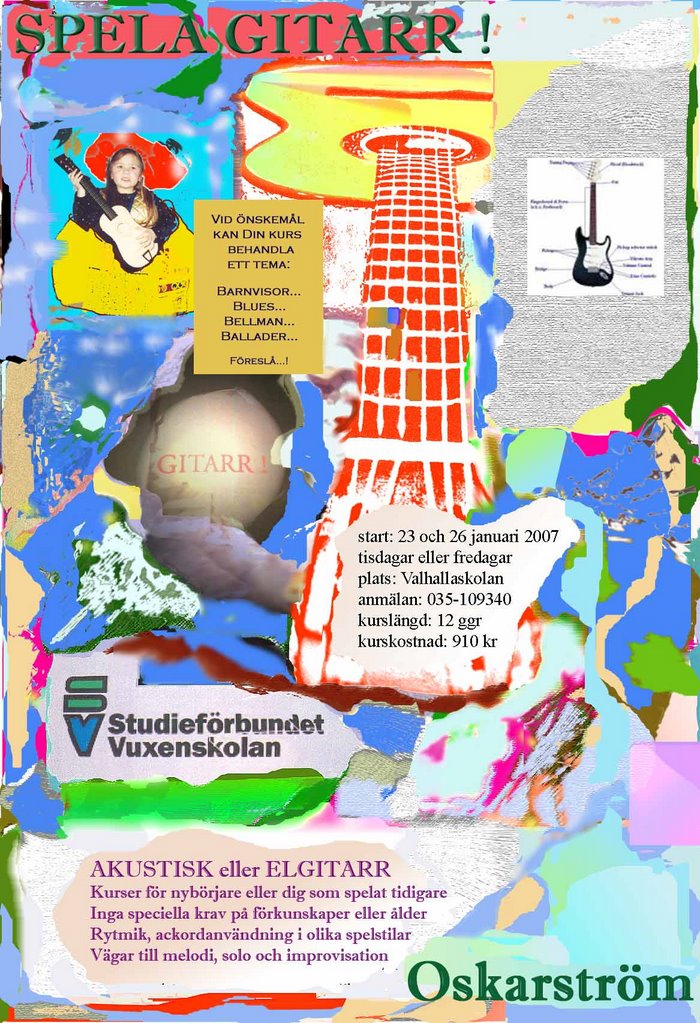
The Poster for the activity, one of them, was done by me, in Photo Shop....The next poster may come sometime before christmas, about two months...., what, what.

Sunday, September 03, 2006

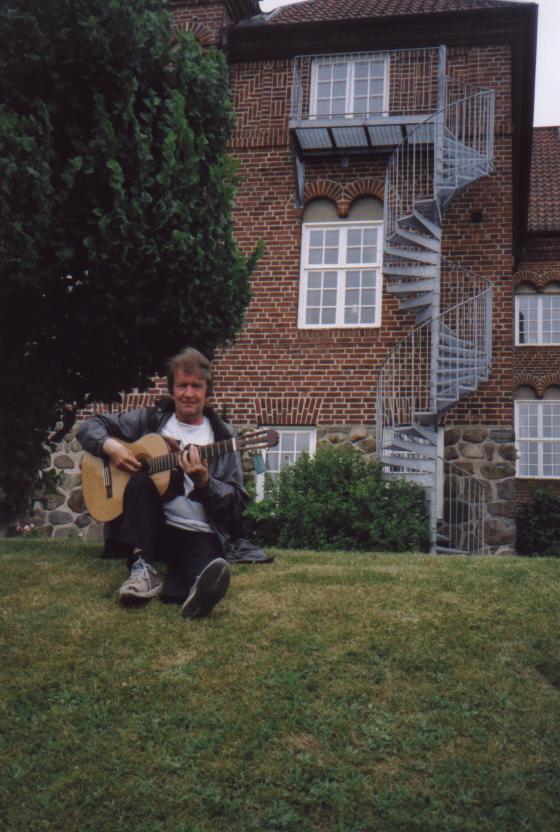
Correct Sitting Position


...if you have no chair. Outdoors. Waiting for the rain.

(picture, july 2006)

Well. if you have a bicycle rack pierced in your ass or are dressed in tight black rubber-suit, you may stand up.

Monday, August 21, 2006

Why does he play the guitar ?


"M. Sor produces a very pretty things on the guitar, but I can state that I have always regretted that this artist, whose musical organisation is far from being commonplace, does not employ his abilities on an instrument that offers scope for his powers. Listening to M Sor, one recongnises a superior artist, but I repeat : Why does he play the guitar ?"

Anonymous quotation, originally from an newspaper in Paris 1832, I think my written note is from the Guitar (magazine).
Found this note recently in my boxes of notes, I don´t know about the spelling really (in my note)
It´s about Fernando Sor (1778-1839), one of the great pioneers of classical guitar (it was not much "classical" then, it was promptly "high-tech" of it´s time, and his music was relatively modern).
With all respect of M. Sor´s legacy, I´m more to the Italians of those times. The road against thick harmony, perfomed alone on solo guitar, was not very fruitable some time later.
All the guitarists in the mid 1800 got development problems in (if)competing with the pianists.
Mostly I find the Italians ( f x Giuliani, Carulli, Carcassi), more inspired by the violin, more cantabile...

But, another point of view on Fernando Sor´s extended sologuitarcomposition is; it´s not easy to play........, for example; his Fantasia No 1 (Opus 7) and the directly aftercoming Theme with variations, I feel it difficult to connect all the way. The risk to play separate gymnastic exercises is clear...., maybe more as we think of it today. In those times it was common to compose "with variations", maybe it was alright to do it in the real showcase manners. This was more and more the time of the virtuosos, for example the violinlegend Paganini (also Italian..., and he was also fond of guitar).

Editor Brian Jeffery (Oxford Guitar Music, 1974); "To convey the impression which it made upon his contemporaries, one can do no better than quote from a letter written to the English magazine The Giulianiad in London in 1833. The writer had heard Sor play at the Philharmonic Society´s concert at the Argyll Rooms in Regent Street in 1817:
"I trust it will not considered a prejudice on my part when I say, that the beautiful compositions of Sor have touched and inspired my soul beyond all others ... Let me point out to you, as a specimen, his delightful fantasia, opera 7 ; the introductory largo, in C minor, with its heart-thrilling combinations of chords (although rather spun out too long), which abounds with elegance and beauty from beginning to end, leading to the tender floating theme in C major, and it´s variations...Allow me, especially, to draw your attention to the variations, Nos. 1, 4, and 7, and say, whether music like that is not worth of study? The work first appeared in Paris 1814, being listed in the Bibliographie de l´Empire Francais on September 3rd of that year".


Anyway, I got up the idea of guitar exercising on new levels in the in the 1970-ies, I can say, everything about it came from the classical music tradition. I found out that the plans and ideas of exercising was even more developed in the classical piano- and violintradition. You could exercise for hours. Then for me came up the idea how meditative it was.
It had immediately nothing to do with the commercial fields, the stressful media market and so on. It was for my own sake. It was, one of many ways, to train my brain and body.
When not sitting with the guitar, I also, inspired by some yoga-instructions, found "new" ways of relaxing, listening, to mainly classical music. It was just wonderful. After the late seventies I´ve really not found it, in the same way, again in longer periods, but I remember...., it´s for my health,.....that´s one answer.

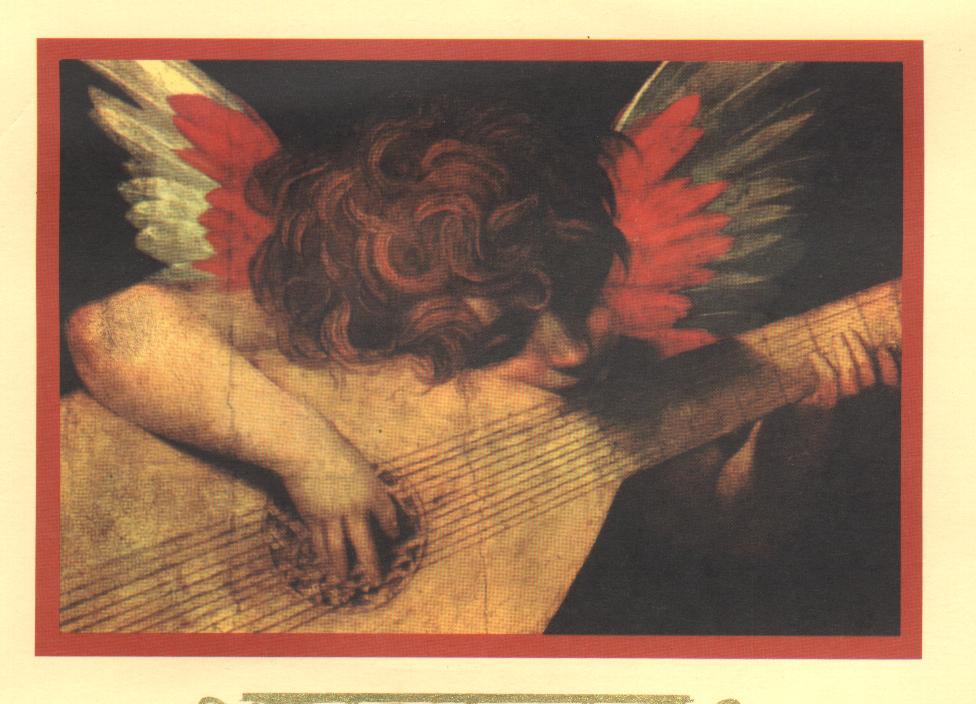
(and for the betzerwisser; yeah , ...I know it´s not the guitar on the picture, as a mother of fact it is; the lute, one of many kinds. Angelo Musicante - Rosso Fiorentino - Firenze - Galleria degli Uffizi)

Wednesday, July 12, 2006

BIG WHEELS ...


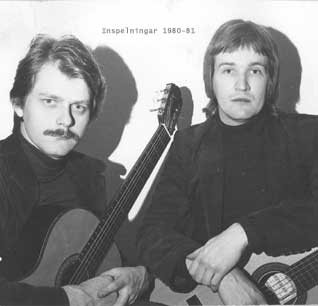
Leif Bengtsson / Me

The summertime guitarduo touring
1978 (with Morgan Svanberg) Places, mainly churches: Vellinge, Äspö, Skivarp, Sjöbo, Bromölla, Mjällby, Dalby, Åhus, Älmhult, Halmstad, Ängelholm, Höganäs, Landskrona
the musical program was; Domenico Scarlatti: Sonata – GF Händel: Suite nr10 – CG Scheidler: Sonata in Dmajor – A Diabelli: Serenad ( 5 pieces)– JS Bach: prelude, allemande fr english suite + fuga in D major

1979 (with Leif Bengtsson) Places, mainly churches: Växjö, Höganäs, Skivarp, Hemmesdynge, Karlshamn, Mariestad, Karlsborg, Helsingborg, Mullsjö, Femsjö, Unnaryd, Tvååker (the persian saloon…), Falkenberg, Värö(Bua), Skummeslöv, Mjällby, Karlskrona, Eksjö, Tranås, Nässjö, Söderköping, Flen, Västra Vingåker, Nyköping, Jönköping, Halmstad, Falsterbo, Aneby, Vadstena (Kapitelsalen),Hyltebruk
the musical programme was; A Vivaldi: Concerto in ...(?)– D Scarlatti; sonatas L 331 & L 23 – JS Bach Fuga,allegro – M Giuliani: Variazioni Concertanti op 130 – E Granados: Oriental

1980 (with Leif Bengtsson) The list of the places is missing, but from some other indications (local newspaper souveniers…, mostly they wrote nicely and surprisingly much) we at least visited; Silverdalen (Hultsfred…), Falkenberg, Åhus, Frinnaryd (?), Karlshamn, Bellö, Mjällby, Skummeslöv , …and more – this summer was in number next to 1979.
the musical programme was; Fernando Sor: Op. 34 – JP Kirnberger Three pieces – JS Bach Andante from the italian concerto – GF Händel Three pieces – F Carulli: Serenad op. 96 – F Chopin: Nocturne

1981 (with Leif Bengtsson) Places, mainly churches: Landskrona, Skummeslöv, Karlskorna, Mjällby, Vadstena (S:t Birgittas kapell), Söderköping, tranås, Nässjö x2
the musical programme was; D Scarlatti; Sonatas in Gmajor and dminor – JS bach French Suite nr 2 (six pieces) – F Carulli: Nocturno op 227 (three pieces) M Ravel: Pavan (for dead princess…)

All programmes were about 50-60minutes, depending of the length of our few very dry or “funny” comments. As in everything else, you have better days and worse days. I don´t remember too many blackouts during concert... – we were normally in good shape and badly paid. We didn´t really spend daytime at luxury hotels, ...it was more like bicycletourists, we lived in cheap hostels and and it did happen that we had the scale& arpeggio warm up for the concert in the woods, changed clothes on a parking lot, and so on.
But when black-out happens, it´s memorable for the competitors in the audience, the robots who never make any mistakes. I ´ve seen it, memory blackout, happen to others, ...and I´ve seen the competitors reactions, they are unforgiveable..., (scornful people I thought belonged to the staff in an concentration-camp)

I remember some of the churches as absolutely fantastic accousticly. Some parts of the programmes 1980-81 were recorded in separate occasions. We had no great ambitions in that direction, it was just like to take some routinephotos with an Kodak Instamatic Pocket Camera – but fatal and happily; one man ( I´ve forgot his name writing this) wanted to record us in church (Färgaryd), late summer (?) 1980 with taperecorder,... with Big Wheels. We completed with some “home-recordings” 1981, from the next programme. These documents were laying on tapewheels, in the drawer almost to year 2000…, I had some new technique at home... and happened to meet Leif at town…., after some months the most from the tapewheels was on cd.

PERSONAL COMPUTER


After some mindly strolling between the two countries, lived in Helsinki one year (where I heard Frank Zappa, Baden Powell among others), it ended up in Malmoe in southern Sweden for about five years (where I heard Laurindo Almeida, Red Mitchell and many others) Already during the dancehalltimes I took some lessons in classical guitar, occasionally my teacher happened to be Gunnar Spjuth.

We were in the same age and had no problems to communicate, and I found everything about the guitar interesting, if it´s was ancient lutemusic or modern experiments, it didn´t matter. To me he vitally opened the doors for the idiom, for the first time I heard fx guitarmusic by Tarrega and Villa-Lobos executed just in front of me, with full power.

I was surprised of the complexity of the instrument, and how far developed the written music could be. Just a short time after I had began to take lessons, in the early seventies (as said it was still during the dancehalltime…), I also began to do some tests in guitarduoplaying with Leif Bengtsson in Halmstad, and we sharpened those activities in the late seventies, when I lived in Malmoe, which ended up in touring summertime. But the first summertour (mainly in churches, much for the mostly delicate accoustic environment for the instrument – we never used any kind of microphones) was done with, the Malmoe native guitarist Morgan Svanberg. Like Gunnar Spjuth he was very well informed whats in and around the classical guitar repertoire at the time, their teacher was Per-Olof Johnson who was important for the development, lifting up (classical) guitarplaying in Sweden on new educational levels.

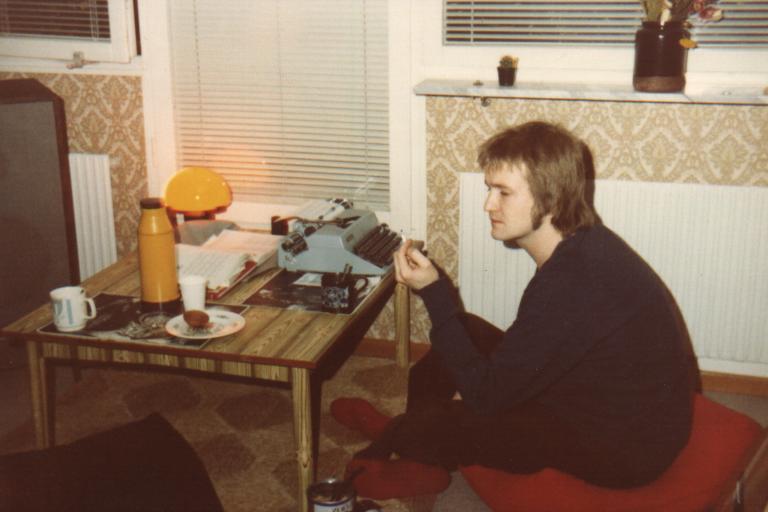
Picture: Beside music I always had spontanous interest for writing…, but I never studied it like music. I don´t know too much of good litterature.
In the seventies the PC was; the typewriter and your head. I think it´s good to see all this young people writing today, and many, many of them are young women , …..as a mother of fact it´s normal behaviour, and not only for Gods ----- remember that you Shrinken Zoombiefied Stupidheads in the Duck Pondcity of Halmstad. I know too much people who deal with great problems writing more than their name. It´s not that they have nothing to say, or know nothing…., they just wanna be …perfect...

Tuesday, July 11, 2006

BETWEEN TWO COUNTRIES


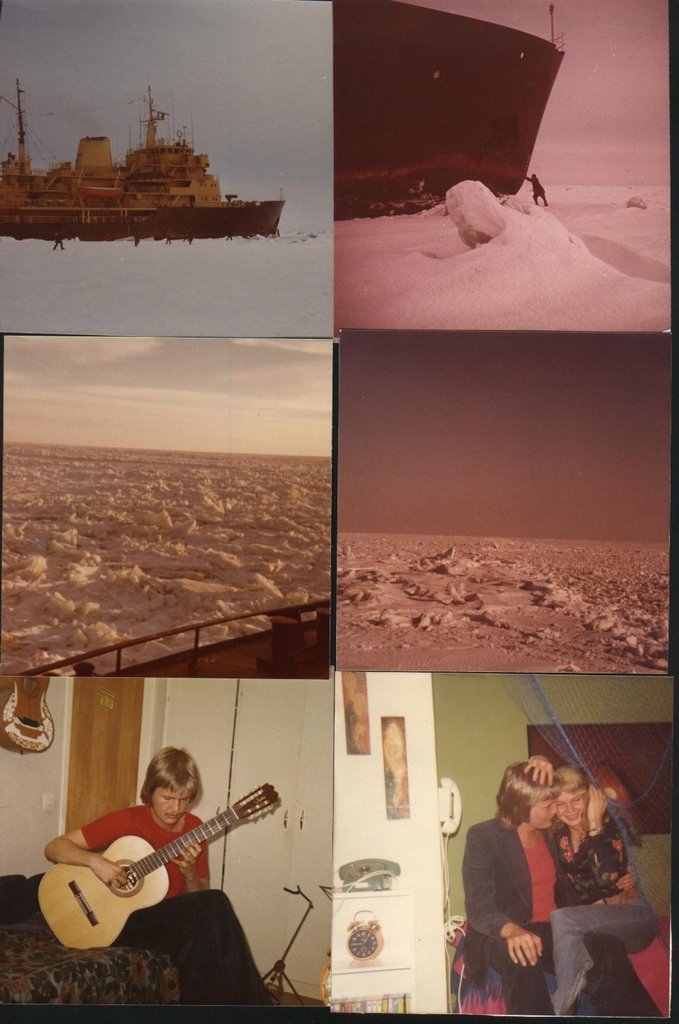
Belonged to the seamen who also travelled upstairs….from the steering-wheel of the ship I had good sight over the action, in nights exciting, ...when every command was to be exactly executed, ...when we were only meters from another ship. The icebreaker was able to “cut” loose civilian ships in the ice, by leaning action. The only light we had was from the ships, if the weather was bad.

Sometimes we “parked” in the ice, waiting for civilians, only visible on radar. If the weather was good and calm, moonlight and stars, ...it was like we had landed on another planet. In every direction the landscape was like “on the moon”,... iceblocks so far the eye could see. This could be in the middle, between Sweden and Finland.

Sometimes we had to tow another ship,… if the wire got cut, it was not the “normally” little snap…., it happened with blue lightning.

......Already the years before, while playing in dancehalls, I had decided to take up some more guitar study, classical guitar, play “with fingers”, be better on sight-reading and so on. The reading was no attitude problem for me, because I always wanted that, to know how the structures, signs and systems worked together.
At earlier age I thought that all the secrets how the music may sound were in the text…., my first books I bought as a kid with own money, was two Chuck Berry books…..,(pianoarrangements mainly)
I thought if I exercise hard from the books,... I shall sound like on the records….., tunes like “Sweet Little Rock and Roller”, “Little Queenie”, “Carol”, “Bye Bye Johnny” and many more.
I found at the age of thirteen my own method; how to “read faster”,… by giving the notes some special signs…., like triangles…. Sometimes I see the same behaviour among young pupils today, it´s inventive, what could I say...

When spring came, normally but finally, the ship went back to Stockholm. During the last period and the years after to come I was several times also in Helsinki. The last picture may symbolize these tours, it´s innocent, just friendly.


In the mid-seventies I was not really sure of which country was for my future and I still wanted to develop in music.

WILD ON.....LULEÅ


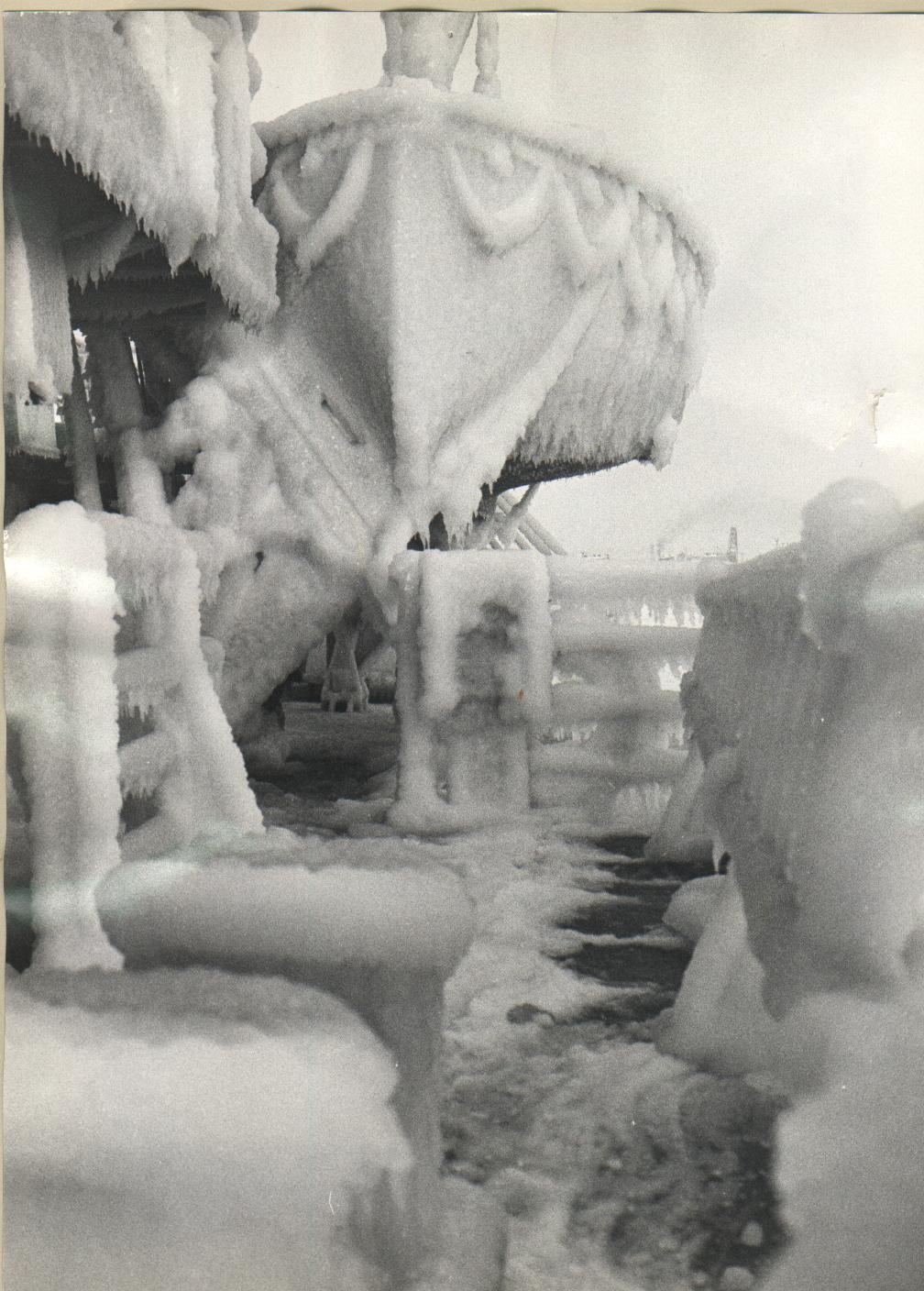
After the basics we went on a searide from Stockholm to Luleå…., it was late autumn and ice was comin in the north between Sweden and Finland. But, before the northern waters, there was open sea…, and storm on some level…, icebreakers were not perfectly built for that. The whole ship was like an icecastle when we came to our destination, Luleå harbour. (On another picture on this blog, it´s possible to see how high up the life-boats were, the picture is not taken on the “first floor” outdoors.)

At least half of the crew had been seasick,.... and before that,… and after that.... I´ve never done any wilder seajourney. My cabin was in the lower front. They most “safe” way to move, ...was likely to crawl on the floor. But we still did some duty during halfway the trip, I had to do some washing (laundry)… , it was even lower down in the front of the ship. It was like the wildest attraction in an amusementpark (tivoli), from time to time the stomach was were my head was, only seconds later my head was were I had my feet. The only “acceptable” cure, was to lay in bed, and wonder……about the experience. But there was no panic and fear (we were sailors…), I´m not sure how many hours that trip took, but it was too many…

On this ship I had one of my guitars (swedish Bjaerton model by the way...), - later I discovered that the only way to hear what I play, was when I put my ear to the guitarbody, that´s how loud the CRUNCHY noice was when we did go in ice. We did that many times, for months, the whole winter…., but no one really complained for that. The swedish icebreakers were under military navy command, but the job was the help the civilian seatrade.